What a Salesforce Connector Looks Like for Analytics Teams

Salesforce Connector: How to Connect Your CRM to Your Analytics Workflow
If your organization runs on Salesforce, a Salesforce connector is what closes the gap between the data your CRM captures and the reports your team actually needs to produce. Salesforce stores an enormous amount of valuable information: pipeline stages, deal histories, account health, activity logs, and customer attributes that took years to accumulate. But accessing that data in a form your analysts can work with is rarely as simple as it sounds. Exporting records manually, reconciling field names, and merging CRM data with performance data from other platforms is the kind of work that consumes hours every week. A well-configured Salesforce connector eliminates most of that. The data flows out of your CRM and into your workflows automatically, on schedule, without anyone touching an export button.
What a Salesforce Connector Actually Does
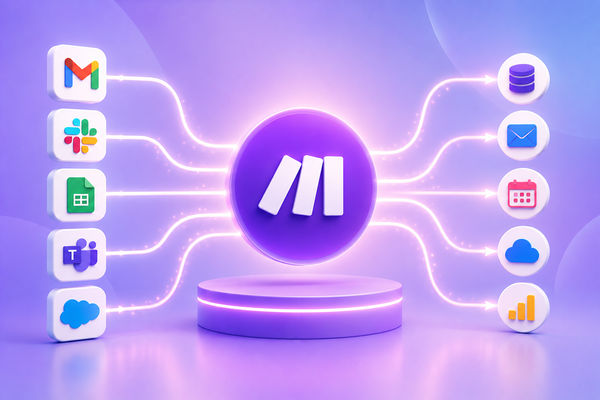
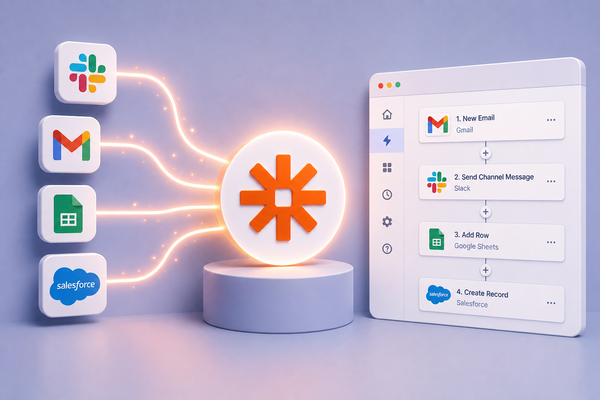
When you connect Salesforce to an analytics or automation platform, you are giving that platform permission to query your CRM on your behalf. You authenticate with your Salesforce credentials, define which objects and fields are relevant to your workflows, and from that point on the connection handles the data extraction. Whether you need Opportunities, Accounts, Contacts, Activities, or custom objects your team has built, the connector retrieves what you specify and makes it available for the next step in your workflow. There is no manual export, no CSV to rename and move, and no risk that someone pulls the wrong version of a report because they forgot to refresh.
The best Salesforce connectors are built for the analysts who use the data, not just the engineers who configure the infrastructure. You should be able to browse the objects available in your Salesforce instance, select what your report needs, and start building a workflow without writing SOQL queries or filing a request with your IT team. Once the connection is in place, it should stay current: pulling updated records on the schedule you define, surfacing new entries automatically, and flagging anything that looks wrong before it makes it into a client-facing deliverable.
What Analytics Teams Actually Need From a Salesforce Integration
The analysts who feel the friction most are the ones responsible for recurring reporting that spans more than one system. They know Salesforce well enough to navigate it, and they understand what the data means in context, but they are not developers. Their job is to produce accurate pipeline reports, revenue forecasts, account summaries, and activity analyses on a schedule that does not move, often for executives or external stakeholders who have no patience for delays. What they need is not just a way to get data out of Salesforce. They need a platform that combines that CRM data with everything else their reports depend on, applies the metrics and business logic their organization has defined, and delivers the output in a format their audience can actually use.
This pattern shows up consistently across revenue operations, sales analytics, and finance teams. A revenue operations analyst might pull closed-won opportunities and pipeline data from Salesforce, cross-reference it with marketing attribution data from HubSpot or Marketo, layer in spend data from advertising platforms, apply a set of attribution rules that exist in a shared spreadsheet, and deliver a formatted Excel or PowerPoint report to leadership every Monday. Each step in that workflow is manual. Each step introduces the possibility of error. And the entire process has to be rebuilt whenever someone changes the report format, adds a new metric, or leaves the team. The Salesforce connector is where the data collection starts. An automation layer is what makes the rest of it reliable.
What This Looks Like in Practice
Consider a sales analytics team at a mid-sized technology company. They maintain a set of weekly and monthly reports for the executive team and board: pipeline coverage by region, win rates by segment, average deal cycle by product line, and forecast accuracy by rep. The data for most of these reports lives in Salesforce, but not all of it. Some inputs come from financial systems. Some come from marketing platforms. Some live in spreadsheets that have been maintained for years and are now too embedded in the workflow to replace. Each week, analysts spend the better part of a day collecting, cleaning, and reconciling that data before they can run a single calculation. The work is not analytically complex. It is operationally exhausting.
When a team like this adds a proper automation layer on top of their Salesforce connector, the workflow changes in a concrete way. The data collection runs on a schedule without anyone initiating it. The joins between Salesforce records and inputs from other systems are defined once and applied consistently every time. The metric calculations, the segmentation logic, the formatting rules that produce a report that looks the way leadership expects, are encoded in the workflow rather than living in someone's head. The analyst who used to spend Monday morning pulling data now spends Monday morning reading the output, checking it for anything that warrants explanation, and adding the context that only a human can provide. That shift is where the actual value of a well-connected Salesforce integration lives.
What to Look for in a Salesforce Connector
The first question to ask when evaluating a Salesforce connector is whether it handles Salesforce alone or works alongside the other data sources your reports depend on. Most revenue and sales analytics workflows pull from more than one place. You might have pipeline data in Salesforce, marketing data in HubSpot, financial data in NetSuite, and campaign performance data in Google Ads, all of which need to come together in a single weekly report. A connector that gets you the Salesforce piece and leaves everything else to manual exports has not solved the problem. Look for a platform where Salesforce is one source among many, not the only one the platform was designed for.
The second question is what the platform does with the data once it has pulled it from Salesforce. Extracting records is the starting point, not the endpoint. You want a platform that can merge your CRM data with other inputs, apply the formulas and business logic your reports have always depended on, and ensure that logic runs consistently every time without someone reapplying it by hand. The goal is a workflow where the hard decisions about how to calculate a metric or how to attribute a deal are made once, saved, and executed automatically on every run.
Third, think carefully about output format. Dashboards have their place, but sales and revenue teams often need reports formatted as Excel files with specific column layouts, or PowerPoint decks that follow a template the executive team has been using for three years. If the platform can take your Salesforce data, apply your logic, and drop the results directly into a formatted spreadsheet or presentation, that is a meaningfully different outcome from a tool that gets you to a dashboard and stops there.
Finally, consider the operational independence the platform gives your analysts. A Salesforce integration that requires engineering involvement every time you want to add a field, change a filter, or adjust a calculation will always move at the pace of the engineering backlog. The best platforms are ones where analysts can configure and modify workflows on their own, explore data in plain language, and build the reporting they need without waiting on someone else.
How Redbird Connects to Salesforce and the Rest of Your Data Ecosystem
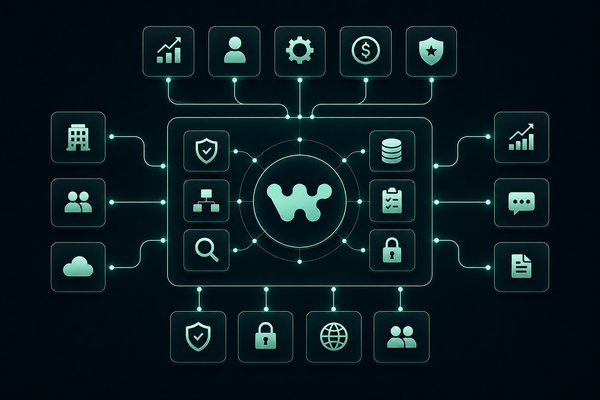
Redbird is an AI-powered workflow automation tool that connects to Salesforce as part of a broader connectivity layer spanning cloud data warehouses like Snowflake and BigQuery, enterprise systems like SAP and Oracle, marketing and advertising platforms including Google Ads, Facebook, LinkedIn, and HubSpot, file-based sources, and legacy systems where no standard API exists. The Salesforce connector is one piece of a platform designed to automate the full data lifecycle: from ingestion and transformation through advanced analytics and production-ready output delivery.
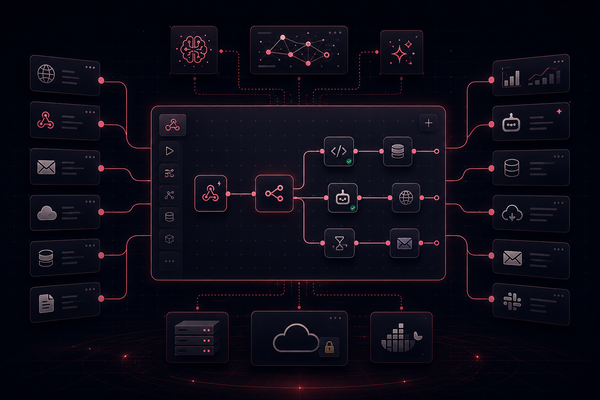
When a user connects Salesforce to Redbird, they are not just enabling data access. They are bringing CRM data into an environment where specialized AI agents handle every step of the workflow that follows. A Data Collection Agent pulls from Salesforce and every other configured source on a defined schedule. A Data Engineering Agent harmonizes records across systems, handles deduplication, and ensures the output is clean and analysis-ready. An Analyst Agent computes custom metrics and applies the business logic that governs how your organization defines pipeline health, deal attribution, or account scoring. A Reporting Agent assembles the final deliverable in the format your team actually uses, whether that is an Excel file structured the way your CFO expects, a PowerPoint presentation built on an existing template, or a live dashboard for ongoing tracking. Every workflow is auditable and every run is fully traceable.
What this means in practice is that reporting cycles that used to take the better part of a day can run in minutes, without anyone initiating them. Teams that spent the majority of their analyst time preparing data report a dramatic reduction in that work after deploying Redbird. That time does not disappear. It moves into interpretation, into the analysis that requires judgment rather than effort, and into the strategic conversations that recurring reporting is supposed to enable in the first place. Redbird works with organizations across financial services, media, consumer goods, and technology, including eight of the Fortune 50, in environments where accuracy, auditability, and scale are non-negotiable.
The Bottom Line
The right Salesforce connector is not just a way to get records out of your CRM. It is the foundation of how your team gets from raw pipeline data to finished, accurate reports that leadership can act on. It should connect to every other source your workflows depend on, keep your CRM data current on a schedule, and sit inside a platform that handles the transformation, the business logic, and the output delivery without manual work in between. The teams that get the most out of their Salesforce investment are the ones who have built, or found, an automation layer that handles everything that happens after the data pull: the joins, the calculations, the validation, and the delivery of outputs in the formats their stakeholders actually use. If your analysts are still spending most of their time preparing data rather than analyzing it, the question is not whether your Salesforce connection is working. It is whether the workflow built on top of it is working as hard as it should be.